BIDAR
Address
Bidar, Karnataka 585401
Open Hours
9:00 AM–6:00 PM for monuments; 8:00 AM–6:00 PM for Narasimha Zharni
Weather
Warm and dry in summer, pleasant in winter, and lush during the monsoon season.
Crowd Level
Medium
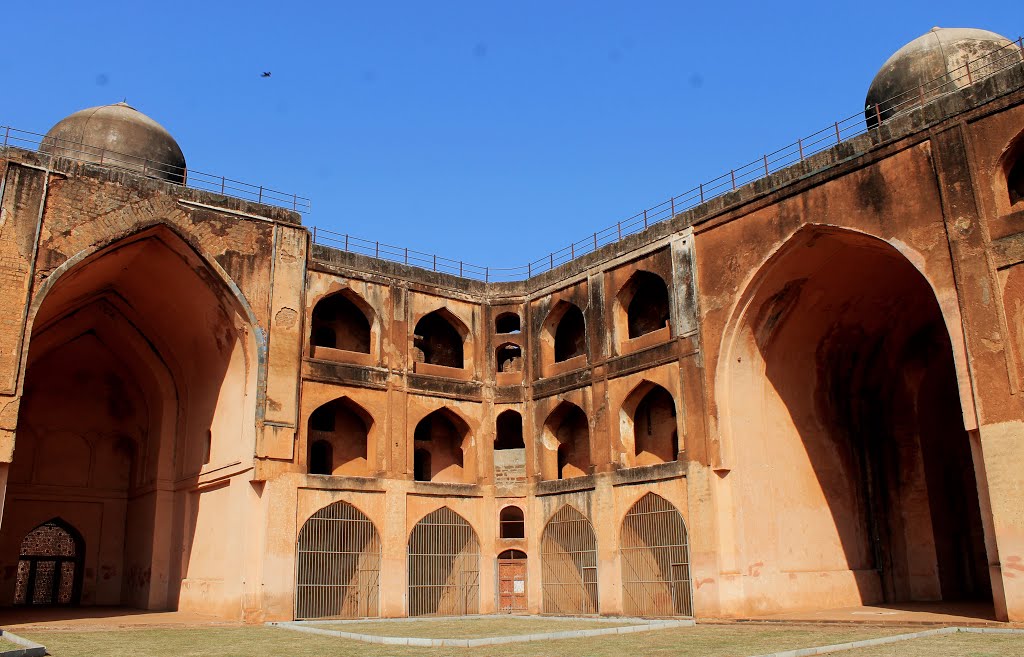
Bidar, located in the northernmost corner of Karnataka, stands as a testament to centuries of cultural synthesis, having served as a pivot for the Chalukyan Empire and later as the illustrious capital of the Bahmani Sultanate. The city is a treasure trove of medieval architecture, defined by the imposing Bidar Fort. This massive structure features five majestic Darwazas (gates) that serve as gateways to a bygone era, housing internal palaces such as the Rangeen Mahal, renowned for its intricate Persian calligraphy and mother-of-pearl inlay, alongside the crumbling grandeur of the Chini and Turkish Mahals.
Among the spiritual and historical highlights is the Madarasa of Mahmood Gawan, a 15th-century academic powerhouse that once attracted scholars from across the Muslim world. The city’s architectural skyline is marked by the Chaubara, a 27-meter high watchtower that now serves as the town's clock tower. For pilgrims, the Narasimha Zharni Cave Temple is of profound significance. Dedicated to Lord Narasimha, the fourth avatar of Vishnu, local mythology suggests that the demon Jalasura, defeated by the Lord, transformed into water to trouble devotees. The temple is located within a natural tunnel, where pilgrims must wade through waist-deep water to reach the inner sanctum, experiencing a unique spiritual journey within the rock formations.
The region’s heritage is further enriched by the Sola-kamba Masjid, one of the largest mosques in India, and the various royal pavilions like the Diwan-E-Am, which once housed the legendary turquoise throne. The Bahmani Tombs at Astur offer a stunning glimpse into the funerary architecture of the era, characterized by colossal domes and vibrant wall paintings that have survived the passage of centuries.
Visitors to Bidar often find the atmosphere a blend of historical awe and quiet contemplation. The town is not just a collection of ruins but a living heritage site. Whether it is the rhythmic echoes of water at the Narasimha Zharni or the silent grandeur of the fort’s bastions, Bidar offers a deeply immersive experience for history buffs, architecture enthusiasts, and those seeking spiritual solace in ancient, hidden sanctuaries.
Visitor Information
Famous For
Bidar Fort, Bahmani monuments, Madarasa of Mahmood Gawan, and the unique underground Narasimha Zharni Cave Temple.
Visit Duration
2–3 days to cover all major historical and religious sites.
Best Time
October to March is ideal to avoid extreme heat; early morning for the cave temple.
Route Options
Well-connected by road to Hyderabad (140km) and Gulbarga. Bidar has its own railway station and is reachable by bus from major Karnataka cities.
Parking
Available at the Bidar Fort main entrance and near the entrance of the Narasimha Zharni temple.
Entry Fee
Rs. 25 for Indians, Rs. 300 for foreigners at major monuments; Temple is free.
Camera Fee
Rs. 25 for professional photography at monuments.
Restaurants Nearby
Numerous local eateries serving authentic Hyderabadi-style biryani and North Karnataka delicacies.
Toilets
Public restrooms available near the Fort complex and main parking zones.
Drinking Water
Bottled water is readily available; carry sufficient hydration for the cave visit.
Wheelchair Access
Limited; ramp access is restricted to the lower levels of the fort and some temple exterior areas.
Medical Facilities
Several private clinics and a government district hospital located within 3km of the city center.
Weather Alerts
High temperatures during April-May; monsoon rainfall can occasionally flood low-lying paths.
Pilgrim Information
Darshan Timings
8:00 AM–12:30 PM and 3:30 PM–6:00 PM.
Special Poojas
Narasimha Abhisheka performed daily; special poojas on Tuesdays and Saturdays.
Prasadam
Available near the temple exit counter post-darshan.
Free Meals (Bhojan)
Annadana is provided on specific occasions by local devotees near the temple premises.
Temple History
Legend speaks of the demon Jalasura; Lord Narasimha slew the demon, and the blood/tears formed the sacred water source within the cave.
Nearby Sacred Places
Papnash Shiva Temple and the Gurudwara Nanak Jhira Sahib.