Lalbagh Botanical Gardens
Address
Bengaluru, Karnataka 560004 Lalbagh Botanical Garden,
Open Hours
6:00 AM–7:00 PM (Daily)
Weather
Mild and pleasant, especially during mornings and evenings. Summers (April-May) can be warm, monsoons (June-September) bring moderate rainfall.
Crowd Level
Medium
The genesis of Lalbagh Botanical Gardens, a verdant oasis in the heart of Bengaluru, is deeply intertwined with the royal lineage of erstwhile Indian rulers. Its tradition can be traced back to visionary leaders like Haidar Ali and Tippu Sultan, followed by the successive rulers of Mysore. Haidar Ali is widely credited as the founder of these magnificent gardens in the Mysore State, initially referred to as 'Lalbagh' in various locations like Srirangapattana, Malavalli, and the one in Bangalore. Drawing inspiration from a beautiful flower garden he maintained at Sira in Tumkur district, Haidar Ali meticulously planned the Lalbagh gardens at Bangalore. He chose a serene spot, comfortably distanced from the old city of Bangalore, to establish a royal retreat and an extensive orchard spanning approximately 40 acres, laying the foundation for what would become a world-renowned botanical marvel.
Since its inception, Lalbagh has undergone continuous development and transformation, thanks to the dedicated efforts of various British and Indian horticulturists. Their collective vision and hard work have cultivated it into a botanical garden of international repute. For the local populace and visiting tourists alike, Lalbagh is much more than just a garden; it's a living museum boasting hundreds of species of plants and trees, many of which have been meticulously imported from diverse corners of the globe. It serves as an idyllic destination for family picnics, a refreshing ground for daily joggers, and a peaceful sanctuary for nature lovers. A prominent feature is the large, tranquil lake situated on one side of the garden, offering a picturesque habitat for numerous water birds, adding to the garden's serene charm.
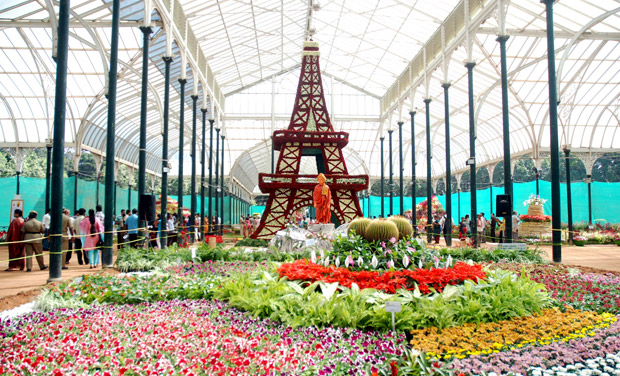
Among Lalbagh's many architectural treasures, the Glass House stands out as a truly magnificent monument and the veritable jewel of the gardens. Its design is a splendid adaptation of London's iconic Crystal Palace, constructed in 1890 under the patronage of John Cameron. Initially christened the Albert Victor Conservatory, it gained prominence as the distinguished venue for the celebrated flower, fruit, and vegetable shows, which are held biannually in January and August, attracting throngs of visitors. Directly in front of this grand structure is a century-old Band Stand, a circular wooden edifice featuring an artistically elevated roof supported by elegant wooden pillars, all anchored to a sturdy granite platform. This beautifully preserved band stand, centrally located within Lalbagh, historically hosted flower shows on a smaller scale prior to the construction of the Glass House and was also a beloved spot where military bands would entertain visitors on weekends.
Beyond these central attractions, Lalbagh offers several other points of interest. To the left of the majestic Glass House, visitors can discover a charming Deer Park and a peculiar circular room, whose upper section provides shelter to a multitude of pigeons. In bygone eras, this intriguing building served as a watchman's room, overseeing the garden's activities. The main entrance to the sprawling park is conveniently located on the northern side, opening up to a captivating statue garden. Behind the artistically designed floral clock, an elegant metallic equestrian statue of His Highness Chamaraja Wadeyar commands attention. This statue, originally gracing Curzon Park in Mysore, was thoughtfully relocated to Lalbagh in 1908 and installed on a distinguished marble pedestal. While the pedestal features four mini platforms in each cardinal direction, the original accompanying statues that once adorned them are now missing, adding a touch of mystery to its grandeur. Plant enthusiasts can also indulge their passion by purchasing a wide variety of plants and seedlings from the Horticultural Society located within Lalbagh, ensuring a piece of this botanical paradise can be taken home.
Visitor Information
Famous For
Glass House, bi-annual flower shows, diverse botanical collection, historical significance, serene lake, jogging track, picnic spot, unique tree species from around the world.
Visit Duration
2–4 hours (can extend during flower shows or if exploring thoroughly)
Best Time
Early mornings (6:00 AM–9:00 AM) for walkers and joggers, late afternoons (4:00 PM–7:00 PM) for general visitors. January and August are ideal for witnessing the spectacular flower shows.
Route Options
Easily accessible by BMTC buses (numerous routes to Lalbagh Gate), Namma Metro (Lalbagh Station on Green Line), auto-rickshaws, and ride-sharing cabs (Uber/Ola) from any part of Bengaluru.
Parking
Paid parking lots are available near the main gates, including the Double Road Gate and the Main Gate (near the floral clock).
Entry Fee
Rs. 30 per adult (estimated). Free entry for walkers during 6:00 AM–9:00 AM and 6:00 PM–7:00 PM. Children under 12 are often free.
Camera Fee
No separate fee for mobile phones or still cameras for personal photography. Professional photography/videography for commercial purposes may require a permit and associated fees.
Restaurants Nearby
Small eateries, coffee shops, and snack kiosks are present inside the garden. Numerous multi-cuisine restaurants, cafes, and street food options are abundantly available on Lalbagh Road and in the nearby Jayanagar and Basavanagudi areas.
Toilets
Well-maintained public toilet facilities are available at various convenient locations throughout the gardens.
Drinking Water
Filtered drinking water stations are available at multiple points. Bottled water can also be purchased from kiosks inside and outside the garden.
Wheelchair Access
Most major paths within the garden are paved and relatively flat, offering decent accessibility for wheelchairs. However, some areas might have uneven terrain or steps. Ramps are generally available at main entrances.
Medical Facilities
A basic first aid station is available within the garden premises. Major hospitals and clinics are located within 2-3 km of Lalbagh in surrounding areas.
Weather Alerts
During the monsoon season (June to September), heavy rainfall can occur, making paths wet and potentially slippery. Summers (April to May) can be hot, so it's advisable to carry water, wear light clothing, and use sunscreen.
Pilgrim Information
Darshan Timings
Not applicable as Lalbagh Botanical Gardens is a public garden and not a religious site. General visiting hours for the garden are from 6:00 AM to 7:00 PM.
Special Poojas
Not applicable; no religious rituals, special poojas, sevas, or abhishekas are conducted here as it is a botanical garden.
Prasadam
No religious offerings or prasadam are served. However, various snack items, beverages, and refreshments are available for purchase at kiosks inside and near the garden.
Free Meals (Bhojan)
No free community meals (annadanam) are provided at Lalbagh Botanical Gardens.
Temple History
Not applicable; the history of Lalbagh pertains to its establishment and evolution as a royal and later public botanical garden, founded by Haidar Ali and developed by subsequent rulers and horticulturists, rather than a religious institution.
Nearby Sacred Places
While Lalbagh itself is a nature and heritage site, Bengaluru is home to several historical temples. Notable nearby sacred places include the Bull Temple (Dodda Basavana Gudi) and Dodda Ganeshana Gudi in Basavanagudi, and the ISKCON Temple, all within a 5-10 km radius and easily accessible.