Santhebennur
Address
santhebennur
Open Hours
8:00 AM–6:00 PM
Weather
Warm and dry during most of the year, pleasant during winter months
Crowd Level
Low
Santhebennur, a historically significant town located approximately 48 kilometers from Davanagere in Karnataka, serves as a poignant reminder of the 16th-century Palegar (local chieftain) influence. The site is most renowned for its exceptional architectural heritage, reflecting a unique fusion of indigenous Hindu craftsmanship and Islamic aesthetic elements. This synthesis of styles is a rare historical treasure, marking the cultural fluidity of the era following the decline of the Vijayanagara Empire.
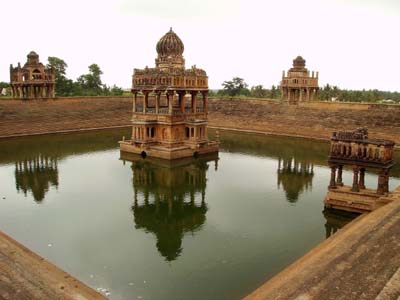
The center-piece of Santhebennur is its magnificent Pushkarini, or sacred stepped tank. This vast water body is a masterclass in engineering, featuring a breathtaking two-storeyed structure positioned perfectly in the middle of the reservoir. Constructed entirely of finely dressed red granite, the tank displays architectural brilliance, with its corners and sides adorned with intricate shrines dedicated to the Ashta Dikpalas—the guardians of the eight cardinal directions. These carvings showcase the meticulous artistry of local sculptors, maintaining the sanctity and cultural relevance of the site.
Historically, the area thrived under the patronage of local chieftains in the mid-1500s. The site represents the zenith of the Palegar regime’s construction activity, where they sought to create water-management infrastructure that doubled as public cultural landmarks. The harmony between the arched structures often associated with Islamic influence and the traditional Hindu temple motifs creates a unique visual narrative that is rare in regional temple architecture.
Today, visitors and history enthusiasts flock to Santhebennur to witness the exquisite stone sculptures and the tranquil atmosphere of the Pushkarini. While it is not a large-scale pilgrimage site in the traditional sense, it functions as an important cultural destination where the history of 1558 comes alive through its granite pillars, ornate carvings, and the serene reflection of the central pavilion in the clear water, offering a peaceful retreat for tourists and architecture students alike.
Visitor Information
Famous For
The historic Pushkarini, two-storeyed middle pavilion, and fine red granite carvings of Ashta Dikpalas
Visit Duration
1–2 hours
Best Time
Early morning or late afternoon for the best lighting for photography
Route Options
Accessible via road from Davanagere; frequent local buses and private taxis available from Davanagere bus station
Parking
Open space available near the site for two-wheelers and cars
Entry Fee
Free public access
Camera Fee
No fee for photography
Restaurants Nearby
Local dhabas and small eateries serving traditional North Karnataka cuisine
Toilets
Basic facilities available in the nearby town center
Drinking Water
Recommended to carry bottled water as there are no direct vendors at the monument
Wheelchair Access
Limited; uneven stone paths make access difficult for wheelchairs
Medical Facilities
Local health clinic available in Santhebennur; major hospitals in Davanagere
Weather Alerts
Avoid visiting during peak summer afternoons to prevent sunstroke
Pilgrim Information
Darshan Timings
Not applicable as this is primarily a historic monument site
Special Poojas
Occasional local worship at the surrounding small shrines during festive days
Prasadam
None provided at the site
Free Meals (Bhojan)
No dedicated food service; visit local town eateries
Temple History
Built in 1558 under Palegar patronage; integrates Hindu shrine architecture with Indo-Islamic structural aesthetics
Nearby Sacred Places
Various small shrines within the Santhebennur town and major temples in Davanagere