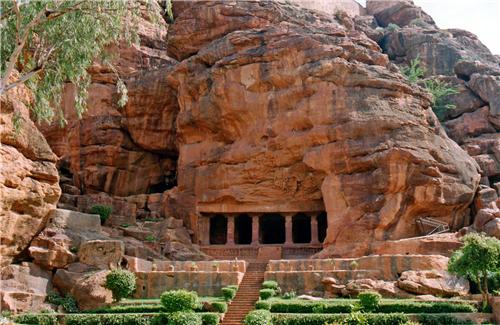
Overview of Badami
Badami, formerly known as Vatapi, was the regal capital of the Early Chalukya dynasty between the 6th and 8th centuries. Nestled picturesquely at the mouth of a red sandstone ravine surrounding the serene Agastya Tank, Badami is globally renowned for its magnificent rock-cut cave temples, magnificent structural temples, and ancient fort ruins.
Architectural Highlights & Cave Temples
The core attraction consists of four cave temples carved into the precipice of a red sandstone hill:
- Cave 1 (Shiva): Features a famous 18-armed carving of Lord Nataraja performing the Tandava dance, depicting 81 classical Bharatnatyam poses.
- Cave 2 (Vishnu): Dedicated to Lord Vishnu in his Trivikrama (Vamana) and Varaha avatars.
- Cave 3 (Vishnu): The largest, deepest, and most ornate cave, built in 578 CE. It contains intricate rock sculptures and rare ceiling fresco paintings reminiscent of Ajanta.
- Cave 4 (Jain): Dedicated to Tirthankaras, featuring beautifully sculpted reliefs of Lord Mahavira and Parshvanatha.
Agastya Lake & Bhutanatha Temples
Overlooking the cave temples lies the sacred Agastya Lake (Agastya Tirtha), believed to possess healing properties. On its eastern shore sits the picturesque Bhutanatha Group of Temples, constructed in soft sandstone, framing spectacular sunset views over the water.
6th-century rock-cut cave temples, Chalukya architecture, 18-armed Nataraja, Agastya Lake, and Bhutanatha Temples
👕 Dress Code & Rules
Casual comfortable attire; respectful modest clothing advised while entering active temple shrines.
₹25 for Indian citizens, SAARC & BIMSTEC visitors; ₹300 for Foreign tourists; Free for children below 15 years.
Designated ASI parking lot available near the entrance of Cave Temples and Agastya Lake.
Local eateries near the town serving authentic North Karnataka meals (Jolada Rotti thali).
6:00 AM – 6:00 PM (Daily)