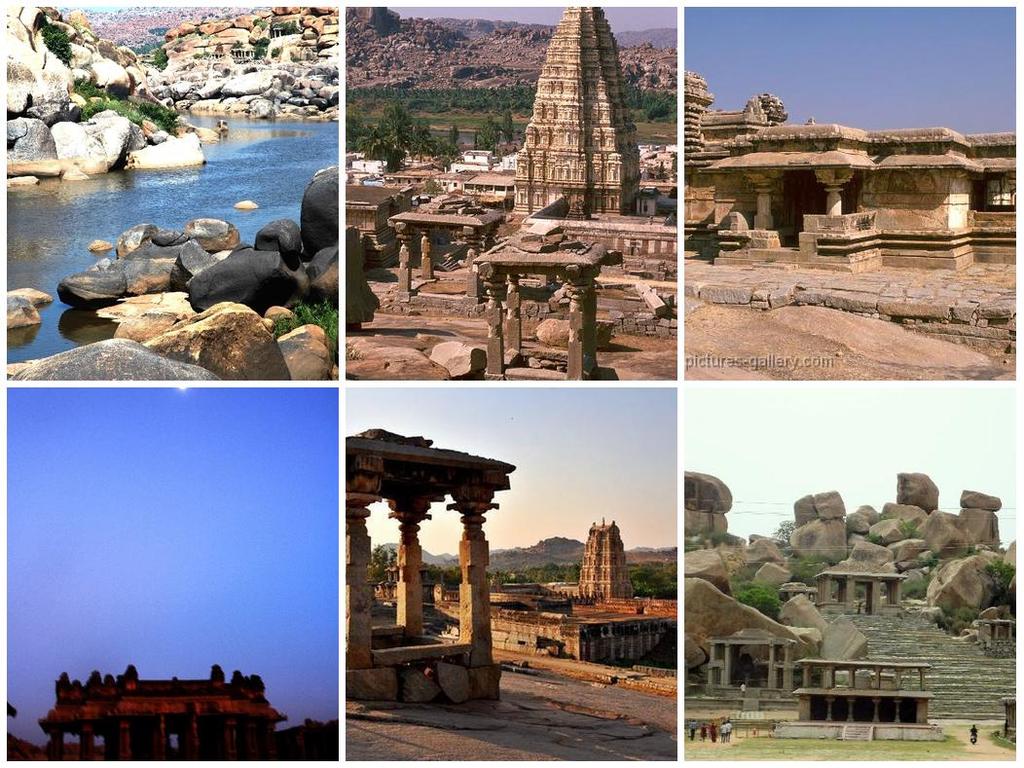
Hampi, the magnificent former capital of the Vijayanagar Empire, is a UNESCO World Heritage Site nestled along the banks of the Tungabhadra River in Karnataka. Often revered as the 'Pompeii of India', this expansive archaeological marvel spans over 10 square miles, presenting a captivating tableau of ancient grandeur amidst a surreal, boulder-strewn landscape. Its ruins offer a profound glimpse into a bygone era of immense wealth, architectural brilliance, and cultural prosperity.
Founded in 1336 under the spiritual guidance of Saint Vidyaranya, the Vijayanagar Empire quickly rose to become one of the greatest Hindu empires in Indian history. Hampi, as its capital, flourished as a global trade center, attracting merchants and artists from across the world. The city was renowned for its intricate irrigation systems, bustling marketplaces, and unparalleled artistic achievements, especially during the reign of Krishnadevaraya.
Today, visitors can wander through the awe-inspiring remains of majestic temple complexes like Virupaksha and Vittala, marvel at the Royal Enclosure's opulent structures, and explore ancient aqueducts and bazaars. The unique topography, dominated by giant granite boulders, adds a mystical charm, making Hampi not just a historical site but an ethereal experience, inviting exploration and contemplation at every turn.
💎 Hidden Gems
Hemakuta Hill Temples: A cluster of pre-Vijayanagara temples offering excellent sunset views. Underground Shiva Temple: A rarely visited, partially submerged temple offering a unique, cool experience. King's Balance: A giant balance where kings were weighed against gold and jewels. Pushkarani (Stepped Tanks): Beautifully symmetrical ancient water tanks like the one near Mahanavami Dibba. Sugriva's Cave: Believed to be the dwelling place of Sugriva from the Ramayana.
<p>The history of Hampi is intrinsically linked to the rise and fall of the Vijayanagar Empire, one of India's most powerful dynasties. Established in 1336 AD by Harihara I and Bukka Raya I, under the blessings of Saint Vidyaranya, Hampi (then known as Vijayanagara) quickly grew from a humble settlement into a formidable capital. It served as a bastion of Hindu culture and power against encroaching Islamic sultanates, reaching its zenith in the 15th and 16th centuries, particularly during the reign of Emperor Krishnadevaraya (1509–1529).</p><p>During its golden age, Vijayanagar was a city of immense wealth, architectural splendor, and cultural vibrancy. It became a global hub for trade in diamonds, pearls, silks, and spices. However, its glory was brought to an abrupt end in 1565 AD after the Battle of Talikota, where the Vijayanagar army was decisively defeated by a confederacy of Deccan Sultanates. The victorious armies then plundered and systematically destroyed the city over several months, leaving behind the magnificent ruins we see today.</p>
<ul><li>Explore Virupaksha Temple: The only active temple in Hampi, dedicated to Lord Shiva, with its towering gopuram.</li><li>Visit Vittala Temple Complex: Famous for its iconic Stone Chariot and musical pillars.</li><li>Wander through the Royal Enclosure: Discover structures like the Hazara Rama Temple, Queen's Bath, and Elephant Stables.</li><li>Climb Matanga Hill for Sunrise/Sunset: Offers panoramic views of the entire Hampi landscape.</li><li>Take a Coracle Ride on Tungabhadra River: Experience the traditional round boat ride amidst scenic beauty.</li></ul>
📸 Photography Spots
Vittala Temple (Stone Chariot and Musical Pillars), Virupaksha Temple (Gopuram and intricate carvings), Matanga Hill (Sunrise/Sunset panoramic views), Riverside ruins and Anegundi (across the river), Elephant Stables, Queen's Bath.
💡 Tips for Travelers
Wear comfortable walking shoes as extensive exploration is required. Carry adequate water, especially during warmer months. Hire a local guide for deeper insights into the history and architecture. Be respectful of local customs and dress modestly, especially when visiting temples. Bicycles or scooters are great for exploring the scattered sites. Beware of monkeys, especially around food.
👕 Dress Code & Rules
Modest dress is recommended, especially when visiting temples and religious sites. Shoulders and knees should be covered. Footwear must be removed before entering temple sanctums.
Most individual sites within Hampi (like Virupaksha Temple) have no entry fee or a nominal one for Indian nationals. The Vittala Temple Complex and Royal Enclosure often have combined entry tickets (approx. INR 40 for Indians, INR 600 for foreigners). Additional fees may apply for cameras and video recording at some sites. Children below 15 years usually have free entry.
Designated parking areas are available near major sites like Virupaksha Temple, Vittala Temple, and the Royal Enclosure. Parking may involve a small fee. Some areas, especially within the core zone, restrict vehicle access, requiring visitors to walk or use local transport (e.g., auto-rickshaws, bicycles).
Mango Tree Restaurant, Hampi's Heritage Restaurant, Laughing Buddha, Gopi Island Restaurant, Mayura Bhuvaneshwari (KSTDC)
6:00 AM – 6:00 PM (Virupaksha Temple open till 8:30 PM)