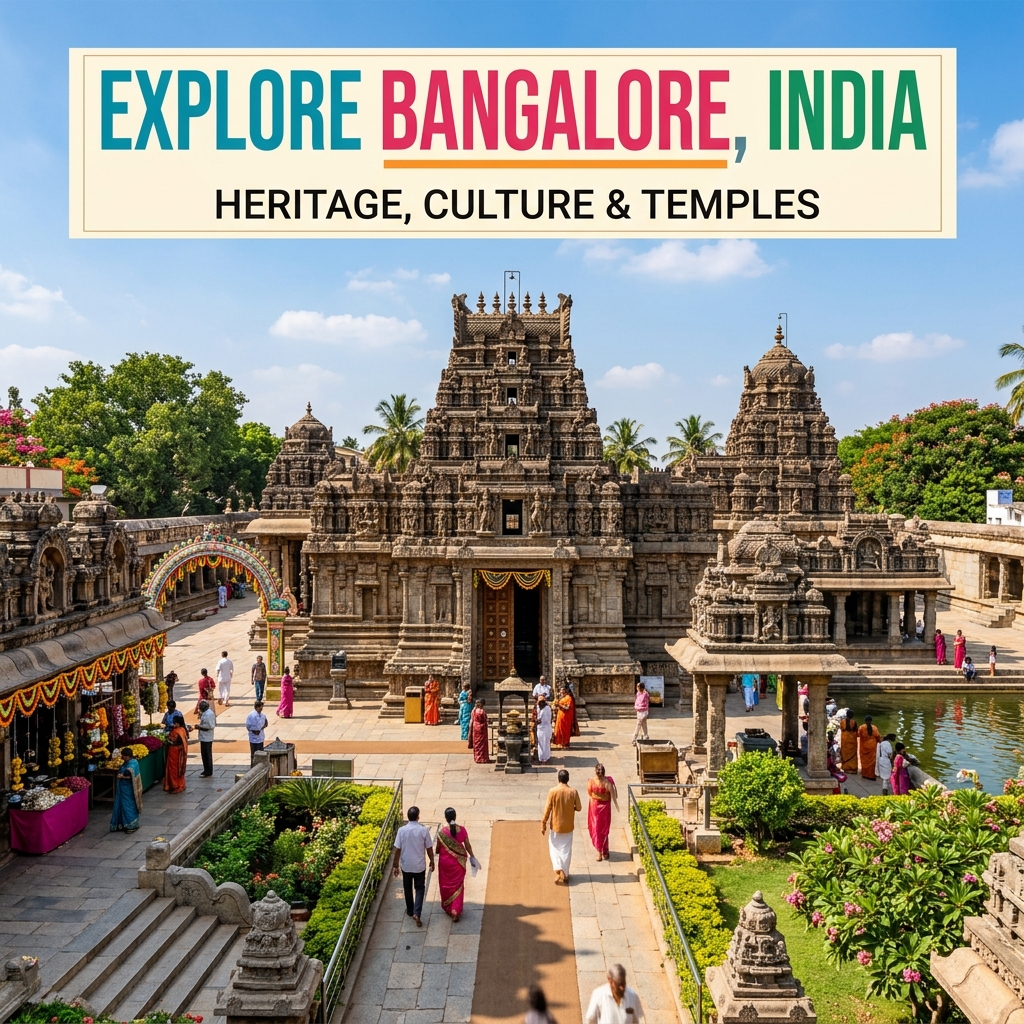
Bangalore, a truly cosmopolitan city, boasts a rich tapestry of spiritual sites catering to diverse faiths. The city is dotted with numerous shrines, ancient temples, historic churches, prominent mosques, and a Gurudwara, reflecting its inclusive spirit. These spiritual landmarks are not just places of worship but also repositories of history, art, and culture, offering a unique glimpse into the city's syncretic soul.
Among its revered temples, the Someshwara temple in Ulsoor stands out with its ancient lineage, believed to be a Chola structure later rebuilt and expanded by Kempegowda, the founder of Bangalore. This temple holds relics of significant archaeological interest and exquisite Vijayanagara architecture. The Kadu Malleswara Temple in Malleswaram, another ancient Dravidian-style temple, is dedicated to Lord Shiva and gives the locality its name. Other prominent temples include the Bull Temple in Basavanagudi, known for its colossal monolithic Nandi, and the innovative ISKCON Temple, blending traditional design with modern aesthetics.
Complementing these temples are several historic churches like St. Mary's Basilica in Shivajinagar, one of the oldest churches in Bangalore, famous for its grand annual feast. The city also hosts significant mosques such as the grand Jamia Masjid near City Market and the Tipu Sultan's Summer Palace mosque, reflecting centuries of Islamic heritage. A visit to these diverse spiritual abodes offers a profound journey through Bangalore's multi-religious identity and peaceful coexistence.
💎 Hidden Gems
Explore the lesser-known Gavi Gangadhareshwara Temple, famous for its unique solsticial phenomenon where sun rays pass through its Nandi's horns to illuminate the deity. Discover the serene Dodda Ganapathi Temple next to the Bull Temple, featuring a gigantic monolithic Ganesh idol. Seek out smaller, ancient Dargahs or Sufi shrines scattered in old Bangalore areas, offering a glimpse into local syncretic traditions.
<p>The history of Bangalore's spiritual sites is deeply intertwined with its evolution from a small settlement to a sprawling metropolis. Ancient temples like the Someshwara Temple in Ulsoor and Kadu Malleswara Temple date back to the Chola period (around 12th century) and were further developed during the Vijayanagara Empire. Kempegowda I, the chieftain who founded modern Bangalore in the 16th century, also contributed significantly to the construction and renovation of several temples, integrating them into the city's planned layout. These temples served not only as religious centers but also as social hubs for communities.</p><p>The advent of different rulers and communities brought other faiths to Bangalore. Christianity found its roots during the British colonial period, leading to the establishment of magnificent churches like St. Mary's Basilica (dating back to the 17th century but consecrated in 1882) and St. Patrick's Church. Islam arrived much earlier, with various Sufi saints and later rulers like Tipu Sultan fostering the construction of mosques and Dargahs, some of which are centuries old. This rich layering of faiths and their architectural expressions over time has shaped Bangalore into the diverse spiritual landscape it is today.</p>
<ul><li>Visit the ancient Someshwara Temple in Ulsoor, admiring its Chola and Vijayanagara architecture.</li><li>Explore St. Mary's Basilica in Shivajinagar, a historic Gothic-style church and a significant pilgrimage site.</li><li>Pray at the grand Jamia Masjid near City Market, one of Bangalore's oldest and most prominent mosques.</li><li>Discover the Kadu Malleswara Temple in Malleswaram, a serene ancient temple dedicated to Lord Shiva.</li><li>Experience the spiritual tranquility at the Sri Guru Singh Sabha Gurudwara, witnessing the community kitchen (Langar).</li></ul>
📸 Photography Spots
Intricate carvings and vibrant gopurams of Someshwara Temple, the serene monolithic Nandi at the Bull Temple, the Gothic architecture of St. Mary's Basilica, the grand minarets and domes of Jamia Masjid, and the unique blend of traditional and modern design at the ISKCON Temple.
💡 Tips for Travelers
Dress modestly when visiting any religious site, ensuring shoulders and knees are covered. Remove your shoes before entering temples and mosques. Maintain silence and respect the sanctity of the place. Carry a reusable water bottle. Plan your visits to multiple sites geographically to save travel time. Public transport and ride-sharing apps are convenient for commuting.
👕 Dress Code & Rules
Modest attire is expected. Shoulders and knees should be covered. For women, it's advisable to carry a scarf to cover the head when entering some mosques or specific areas within temples.
Most temples, churches, and mosques in Bangalore do not have an entry fee. Donations are welcome at many places. Photography permits might be required or come with a nominal fee at some specific sites.
Parking can be challenging, especially around older, crowded religious sites. Limited street parking is available, and it's often advisable to use public transport (metro, bus) or ride-sharing services. Larger, more modern institutions like the ISKCON temple usually offer dedicated parking facilities.
<ul><li><strong>CTR (Shri Sagar)</strong>, Malleswaram: Famous for authentic South Indian tiffins, especially Benne Masale Dose, close to Kadu Malleswara Temple.</li><li><strong>MTR (Mavalli Tiffin Rooms)</strong>, Basavanagudi: A legendary establishment for traditional Karnataka cuisine, near the Bull Temple.</li><li><strong>Koshy's Restaurant</strong>, St. Mark's Road: A Bangalore institution offering multi-cuisine food, a short drive from St. Mary's Basilica.</li><li><strong>Shiv Sagar</strong>, Ulsoor: Good options for vegetarian North & South Indian food, conveniently located near Someshwara Temple.</li><li><strong>Local Darshinis</strong>: Numerous small, local eateries scattered throughout the city, offering quick and delicious South Indian snacks and meals at very affordable prices.</li></ul>
N/A