Halebid
Address
Halebeedu, Karnataka 573115
Open Hours
8:00 AM–6:00 PM
Weather
Pleasant and cool throughout the year, with mild winters and refreshing monsoons
Crowd Level
Medium
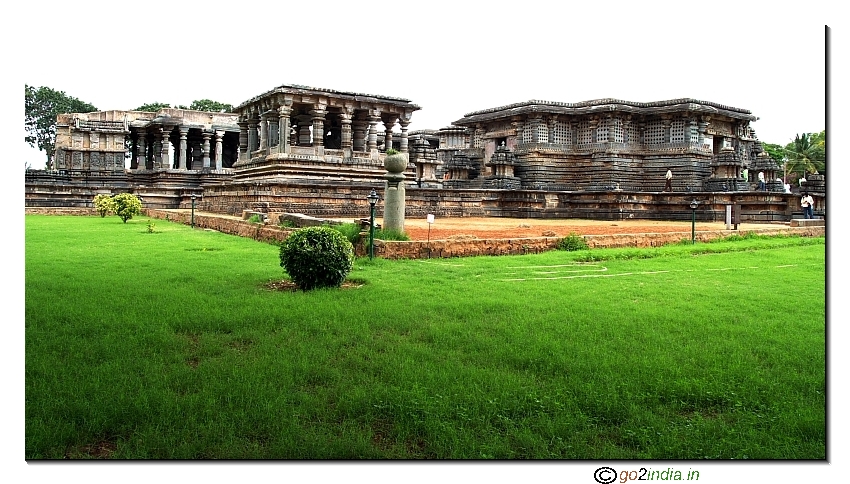
Halebidu, historically known as Dwarasamudra, served as the glorious capital of the Hoysala Empire during the 12th and 13th centuries. Situated in the Hassan district of Karnataka, this site stands as a testament to the peak of Indian temple architecture, rivaling the craftsmanship found at Belur. The town is famously anchored by the Hoysaleswara Temple, a masterpiece of soapstone carving that depicts intricate stories from the Puranas, Mahabharata, and Ramayana.
The Hoysaleswara temple, dedicated to Lord Shiva, is unique in its dual-shrine layout. Legend suggests that the temple was commissioned by Ketumalla, an officer under King Vishnuvardhana, to glorify the king’s devotion. The mythology of the region is deeply rooted in the concept of the Dwarasamudra (Gateway to the Sea), and the architecture reflects this with a star-shaped plan that allows sunlight to play upon the countless friezes of gods, dancers, and mythical creatures (yalis). Unlike many other temples, these structures were never fully completed due to the devastating raids of the Delhi Sultanate in the 14th century, which ultimately led to the shifting of the Hoysala capital to Belur and later further south.
Architecturally, the temples are celebrated for their exuberant carving—a level of detail that looks like ivory work carved into stone. Visitors are often stunned by the monolithic Nandi statues housed in individual pavilions, which are among the largest in India. The outer walls feature horizontal tiers of sculptures, ranging from lions and elephants to elaborate mythological battles and scenes of daily life from the Hoysala court. The precision of the lathe-turned pillars and the highly polished ceilings remain a wonder of structural engineering even by modern standards.
Beyond the Hoysaleswara, the site also hosts the Kedareshwara Temple and several Jain Basadis, such as the Parshvanatha Basadi, which showcase equally impressive, albeit more restrained, architectural elegance. These Jain monuments highlight the religious tolerance and patronage of the Hoysala rulers, who fostered both Shaivite and Jain traditions simultaneously. The spiritual atmosphere is one of profound silence and historical reflection, drawing scholars, history enthusiasts, and devotees from around the world.
For the modern visitor, Halebidu offers more than just stone history. The serene surroundings and the well-maintained lawns surrounding the Archaeological Survey of India (ASI) protected monuments provide an excellent space for photography and meditation. While the sites are no longer active centers of continuous daily worship in the way a modern temple is, the sanctity of the sanctums remains, and visitors are expected to maintain a respectful demeanor as they explore the remnants of an empire that defined the artistic landscape of the Deccan plateau.
Visitor Information
Famous For
Hoysaleswara Temple, intricate soapstone carvings, star-shaped temple architecture, and historic Jain Basadis
Visit Duration
3–4 hours
Best Time
October to March for cooler weather, early morning for photography
Route Options
Connected by road from Hassan (30km) and Belur (15km). Accessible via KSRTC buses from Bangalore and Mysore.
Parking
Dedicated spacious parking lot available near the temple complex entrance
Entry Fee
Rs. 30 for Indian citizens, Rs. 500 for foreign nationals, free for children under 15
Camera Fee
Free for mobile cameras, Rs. 25 for professional photography
Restaurants Nearby
Local vegetarian restaurants and KSTDC hotel restaurants nearby
Toilets
Clean public toilets available near the main parking area
Drinking Water
Available at the visitor center and near the museum entrance
Wheelchair Access
Ramps provided for the outer courtyard, though interior sanctums involve stone steps
Medical Facilities
Primary Health Centre in Halebidu town and advanced facilities in Hassan
Weather Alerts
Slippery stone surfaces during monsoon season, use caution with footwear
Pilgrim Information
Darshan Timings
Temple complex accessible during ASI visiting hours 8:00 AM–6:00 PM
Special Poojas
Occasional local temple festivals; major celebrations during Shivarathri
Prasadam
Small offerings can be purchased at local shops outside the complex
Free Meals (Bhojan)
No fixed temple kitchen, but local hotels serve meals from 8:00 AM to 9:00 PM
Temple History
12th-century Hoysala architecture, dedicated to Lord Hoysaleswara (Shiva) by King Vishnuvardhana
Nearby Sacred Places
Chennakeshava Temple (Belur), Yagachi Dam, and various ancient Basadis in the vicinity