Mosale
Address
Mosale, Karnataka
Open Hours
8:00 AM–6:00 PM
Weather
Warm and pleasant for most of the year, cool and misty during monsoon and winter
Crowd Level
Low
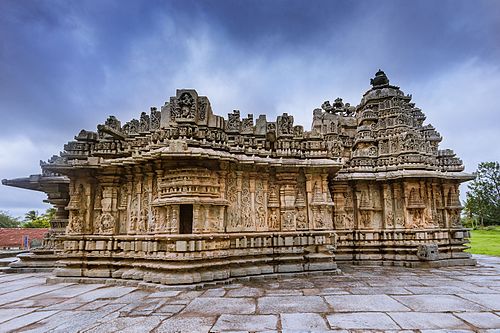
Mosale, a serene village located approximately 14 kilometers from Hassan, Karnataka, is home to a rare and exquisite architectural treasure of the Hoysala dynasty. The site is world-renowned for its twin temples—the Nageshvara (Shiva) and Chennakeshava (Vishnu)—which stand side-by-side, mirroring each other in design, scale, and masterful craftsmanship. Built during the peak of the Hoysala era in the 12th century, these structures represent a perfect harmony of symmetry and intricate soapstone carvings, which are the hallmark of Hoysala artistry.
The architectural layout follows the classic trikuta-style base but is distinct for its dual-shrine configuration. The Nageshvara temple, dedicated to Lord Shiva, sits to the south, while the Chennakeshava temple, dedicated to Lord Vishnu, occupies the north. Both temples are perched on a raised jagati (platform) that follows the contours of the shrines. Visitors are often captivated by the Tandava Vishnu—a rare and mesmerizing sculptural depiction of Lord Vishnu in a dancing pose—which stands as a testament to the theological and artistic depth of the period. The exterior walls are adorned with elaborate friezes depicting Puranic stories, celestial dancers, and intricately carved scrollwork that remains crisp despite centuries of exposure.
Historically, these temples are attributed to the patronage of the Hoysala kings who utilized the soft, workable nature of chloritic schist (soapstone) to create 'poetry in stone.' Unlike the larger, more crowded temple complexes in Belur and Halebidu, the Mosale temples offer an intimate and tranquil environment for spiritual reflection. The absence of massive crowds allows pilgrims and historians alike to study the shikharas (towers) which are masterfully crafted with fine ornamental detailing typical of the 12th-century Dravidian and Vesara styles.
For the visitor, the site offers a profound spiritual atmosphere, largely untouched by the commercialization seen at major tourism hubs. The surrounding lush greenery of the Hassan district adds to the peaceful ambiance. While there are no grand, multi-day festivals akin to Belur, local community celebrations and smaller Rathothsava (chariot festivals) occur periodically, drawing devotees from neighboring villages to celebrate the divinity of the twin deities. It remains a hidden gem for those seeking to understand the architectural zenith of medieval Karnataka.
Visitor Information
Famous For
Twin Hoysala temples (Nageshvara and Chennakeshava), intricate soapstone carvings, and the rare Tandava Vishnu sculpture.
Visit Duration
1–2 hours
Best Time
Early morning or late afternoon for the best light to photograph the sculptures.
Route Options
Accessible via taxi or bus from Hassan city; approximately 30 minutes drive through local state highways.
Parking
Small unpaved area near the temple entrance, sufficient for cars and bikes.
Entry Fee
Free entry for all visitors.
Camera Fee
No camera fee; photography is permitted in the outer temple premises.
Restaurants Nearby
Small village tea stalls; full-service restaurants are located in Hassan.
Toilets
Basic restroom facilities are available near the village center.
Drinking Water
Visitors are advised to carry their own bottled water.
Wheelchair Access
Limited; the raised platform has steps that may be difficult for wheelchairs.
Medical Facilities
Primary health centers in nearby villages; full medical services in Hassan.
Weather Alerts
Exercise caution during heavy monsoon rains as the stone paths can be slippery.
Pilgrim Information
Darshan Timings
8:30 AM–12:30 PM, 4:00 PM–6:00 PM
Special Poojas
Daily archana and regular morning poojas; special offerings on auspicious Hindu calendar days.
Prasadam
Basic prasadam provided by the resident priest after pooja hours.
Free Meals (Bhojan)
No organized Annadanam; visitors typically eat in Hassan.
Temple History
Constructed in the 12th century by Hoysala rulers; built as a twin-shrine complex to represent the unity of Shaivism and Vaishnavism.
Nearby Sacred Places
Belur Chennakeshava Temple, Halebidu Hoysaleswara Temple, and Gorur Dam temple.